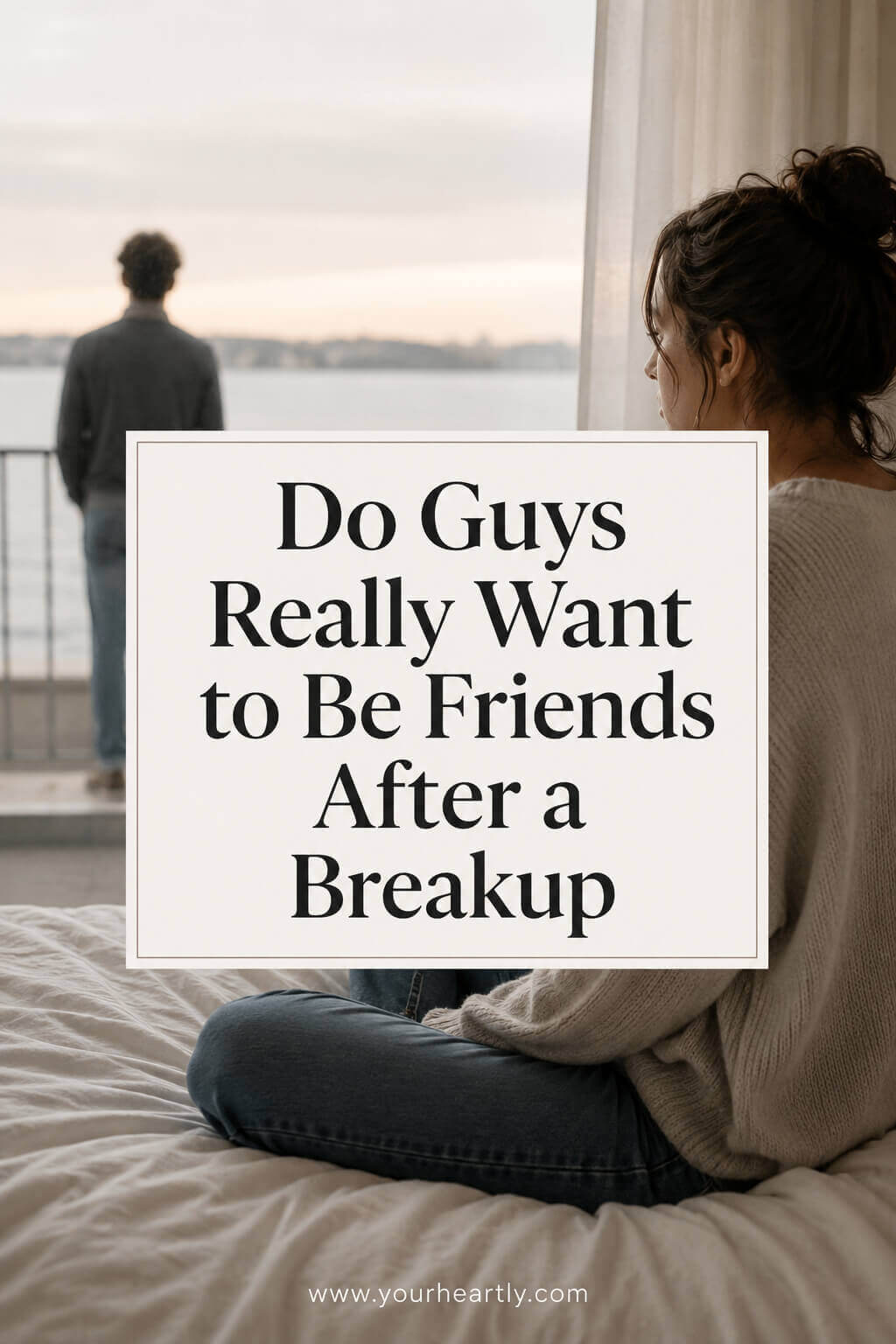


After a breakup, hearing “I still want to be friends” can feel comforting, confusing, or even suspicious. You may wonder whether he genuinely values you as a person, wants to keep the door open, feels guilty about hurting you, or simply does not know how to let go.
The truth is that men are not all motivated by the same thing, and friendship after a breakup can mean very different things depending on how the relationship ended. What matters most is not the sentence itself but the behavior that follows it.
If you are trying to decide whether friendship is realistic, pay attention to timing, boundaries, emotional honesty, and whether both of you have actually accepted the breakup.
1. Sometimes He Genuinely Values You as a Person
Yes, some men sincerely want a friendship after a breakup because the emotional connection was bigger than the romantic relationship. A partner may have become one of your closest friends, and losing every form of contact at once can feel unnecessary when the breakup was respectful and mutual.
Instead of judging the situation by one emotional moment, notice whether he treats the friendship as a separate relationship rather than using it as a softer version of dating.
He may check in occasionally, respect your new boundaries, avoid flirting, and be genuinely supportive without demanding the closeness you had as a couple.
A sincere friendship usually becomes calmer over time rather than keeping both people in constant emotional uncertainty.
The useful question is not whether the situation feels uncomfortable today, but whether the pattern is workable, respectful, and emotionally safe over time. If his actions match the limits of friendship and neither of you is secretly waiting for reconciliation, staying in each other’s lives can sometimes be healthy.
2. He May Be Struggling to Let Go
A request for friendship can also be a way to soften the loss when he is not emotionally ready for a clean separation. This matters because breakups remove routines, affection, inside jokes, daily messages, and a familiar source of support, so keeping contact can make the transition feel less final.
A practical way to get clarity is to watch whether he becomes unusually upset when you create distance or act like a single person.
He may say he only wants friendship but still expect daily texting, late-night calls, emotional reassurance, or detailed updates about your life.
That does not necessarily mean he is manipulating you; he may simply be grieving and trying to hold on to what feels familiar.
Try to separate what is temporary from what has become a repeated pattern. Friendship is unlikely to feel stable until both of you can tolerate the reality that the romantic relationship has ended.
3. He Might Want to Keep the Door Open
Sometimes “let’s be friends” really means “I do not want the relationship right now, but I also do not want to lose access to you.” This can happen when someone is uncertain, wants freedom, or hopes to revisit the relationship later without making a commitment today.
Give yourself a more concrete test: pay attention to whether he sends mixed signals that keep you emotionally invested.
He may disappear for days, return with affectionate messages, become jealous when you date, or mention getting back together without taking meaningful steps toward reconciliation.
These behaviors create a waiting room rather than a friendship, because you remain emotionally available while the relationship itself stays undefined.
You do not need a dramatic answer to make a wise decision; you need an honest picture of what happens most of the time. If friendship keeps you hoping, analyzing, or postponing your own healing, distance may protect you better than staying connected.
4. Guilt Can Be Part of the Offer
A man who ended the relationship may suggest friendship because he feels bad about causing pain and wants reassurance that you do not hate him. Guilt can make people overcorrect by offering support, frequent check-ins, or promises that they will always be there.
Instead of judging the situation by one emotional moment, ask whether the contact is helping you heal or mainly helping him feel like a good person after the breakup.
For example, he may repeatedly ask whether you are okay but become uncomfortable when your honest answer includes anger, grief, or the need for space.
Kindness after a breakup is valuable, but you are not responsible for making the person who hurt you feel less guilty.
The useful question is not whether the situation feels uncomfortable today, but whether the pattern is workable, respectful, and emotionally safe over time. A healthy friendship should be chosen freely by both people, not used as emotional proof that the breakup caused no real damage.
5. Attraction Can Complicate Friendship
Even when both people have good intentions, attraction can make post-breakup friendship much harder than it sounds. This matters because physical chemistry, emotional intimacy, and old habits do not disappear simply because you changed the label on the relationship.
A practical way to get clarity is to notice what happens when you spend time alone, talk about dating, or lean on each other during vulnerable moments.
If casual coffee regularly turns into flirting, cuddling, kissing, or conversations about your old relationship, you may be recreating the bond without resolving why it ended.
This can feel comforting in the short term while making it harder to move forward or form new relationships. New partners may also find this blurred closeness difficult to understand, especially if neither of you can explain what the friendship now is.
Try to separate what is temporary from what has become a repeated pattern. Friendship works better when both of you can interact without constantly slipping back into romantic roles or using closeness to avoid grief.
6. The Breakup Reason Matters
Whether friendship is realistic depends heavily on why the relationship ended and what happened between you. A respectful breakup over timing or incompatibility creates a very different foundation from repeated lying, betrayal, manipulation, cruelty, or boundary violations.
Give yourself a more concrete test: consider whether trust and basic respect still exist outside the romantic relationship.
Two people who wanted different futures may eventually become friendly, while someone who repeatedly ignored your boundaries may continue doing so under the label of friendship.
You do not owe friendship simply because you once loved someone, and forgiveness does not require ongoing access. A friendship cannot become healthy simply because you stop calling the connection romantic; the same unresolved dynamics can follow you into the new label.
You do not need a dramatic answer to make a wise decision; you need an honest picture of what happens most of the time. If the relationship damaged your sense of safety or self-respect, distance may be the healthier and more honest outcome.
7. Timing Makes a Big Difference
Even genuine friendship can fail when it begins too quickly after a breakup. Both people often need a period without constant contact so the nervous system, routines, expectations, and attachment to the old relationship can settle.
Instead of judging the situation by one emotional moment, give yourself enough space to notice who you are when you are no longer talking every day.
You may discover that a month of no contact reduces your urge to seek reassurance, while immediate friendship keeps reopening the same questions and emotional wounds.
Taking space is not punishment, and it does not automatically mean you can never speak again.
The useful question is not whether the situation feels uncomfortable today, but whether the pattern is workable, respectful, and emotionally safe over time. A later friendship has a better chance when it grows after acceptance rather than being used to prevent the breakup from feeling real.
8. Ask Whether Friendship Is Actually Good for You
The most important question is not whether he truly wants friendship but whether friendship supports your wellbeing. This matters because you can believe his intentions are sincere and still decide that staying close makes it harder for you to heal.
A practical way to get clarity is to notice how you feel after contact: calmer and grounded, or anxious, hopeful, jealous, rejected, and pulled back into the past.
If every conversation sends you searching for hidden meaning or checking whether he misses you, your emotions may be telling you that you need more distance.
You are allowed to change your mind about friendship later, and you do not need to make a permanent decision immediately after the breakup.
Try to separate what is temporary from what has become a repeated pattern. Choose the level of contact that helps you become emotionally independent again, even if that means no friendship for now.
Conclusion
Guys can genuinely want friendship after a breakup, but the words alone do not tell you why. Friendship may come from real care, difficulty letting go, guilt, lingering attraction, or a desire to keep the possibility of reconciliation alive.
Look at his behavior, the reason you broke up, and how contact affects you emotionally. A healthy friendship should respect boundaries and allow both people to move forward. If staying connected keeps you stuck, confused, or hopeful in a painful way, you are allowed to step back. Friendship is optional after a breakup, not a responsibility you owe each other.