


Getting excited about someone can make it easy to focus on chemistry, attraction, and all the little moments that make you smile. But when a relationship starts moving toward something more serious, there is another side of compatibility worth exploring.
You want to know whether your expectations, values, communication styles, and future goals can actually work together. You do not need to have every answer immediately, and these conversations should never feel like an interview. Instead, think of them as opportunities to understand each other more deeply.

The right questions can help you discover things you might not naturally discuss during casual dates. They can reveal what makes your partner feel loved, how they handle conflict, what they expect from commitment, and what kind of future they are hoping to build. For more on this topic, you may want to read 100+ Random Questions To Ask Your Boyfriend.
You may not agree on everything, and that is perfectly normal. A healthy relationship does not require two people to be identical. What matters is whether you can respect your differences, communicate honestly, and find compromises that work for both of you. If this sounds familiar, you may want to read 100+ Fun Questions To Ask Your Boyfriend next.
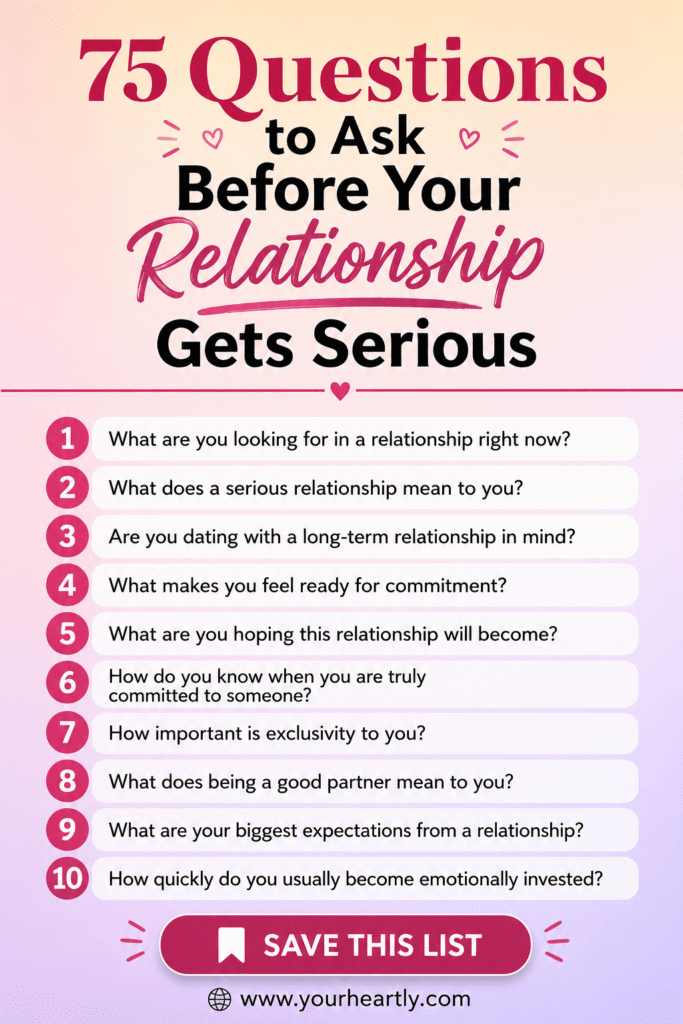
If you are wondering whether your relationship is ready for the next step, these questions can help you have more meaningful conversations before things get serious. It may also help to read 100+ Juicy Questions To Ask Your Boyfriend for another perspective.
Questions About Relationship Intentions
Before becoming deeply invested, it helps to understand what you both want from the relationship. You may have strong feelings for each other while imagining completely different futures. These questions can help you clarify expectations without putting unnecessary pressure on either person. You can learn more about this in How To Know If You're Ready For A Serious Relationship.
- What are you looking for in a relationship right now?
- What does a serious relationship mean to you?
- Are you dating with a long-term relationship in mind?
- What makes you feel ready for commitment?
- What are you hoping this relationship will become?
- How do you know when you are truly committed to someone?
- How important is exclusivity to you?
- What does being a good partner mean to you?
- What are your biggest expectations from a relationship?
- How quickly do you usually become emotionally invested?
Questions About Love and Affection
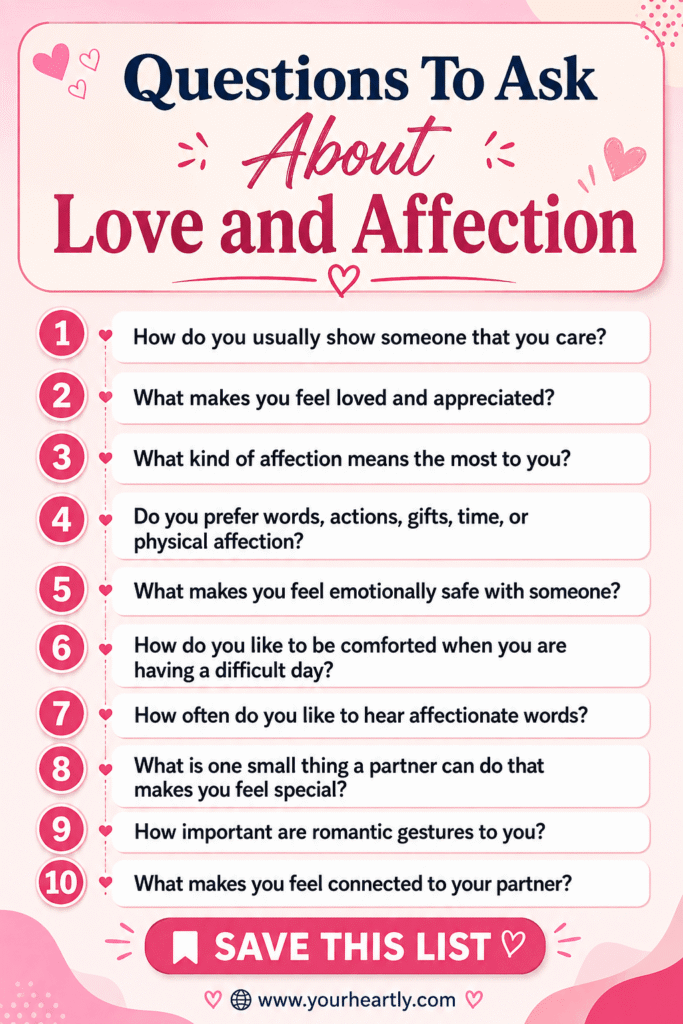
People express love in different ways. One person may value words of affection, while another feels closest through quality time or thoughtful actions. Understanding how you and your partner give and receive affection can prevent misunderstandings and help you build a stronger emotional connection.
- How do you usually show someone that you care?
- What makes you feel loved and appreciated?
- What kind of affection means the most to you?
- Do you prefer words, actions, gifts, time, or physical affection?
- What makes you feel emotionally safe with someone?
- How do you like to be comforted when you are having a difficult day?
- How often do you like to hear affectionate words?
- What is one small thing a partner can do that makes you feel special?
- How important are romantic gestures to you?
- What makes you feel connected to your partner?
Questions About Communication
Good communication becomes especially important when a relationship moves beyond the exciting early stage. You will eventually have misunderstandings, disagreements, and difficult conversations. Learning how your partner communicates under pressure can tell you a lot about how the two of you may handle challenges together.
- How do you prefer to talk about problems?
- Do you like resolving disagreements immediately or taking time to cool down?
- What makes you feel heard during a difficult conversation?
- How do you react when you feel misunderstood?
- Is it easy for you to tell someone when your feelings are hurt?
- What does healthy communication look like to you?
- How do you prefer your partner to bring up a sensitive topic?
- What makes you shut down during an argument?
- How important is daily communication to you?
- What can I do to communicate with you more effectively?
Questions About Boundaries
Healthy boundaries help both people feel respected and comfortable. Before becoming serious, it is useful to understand what your partner considers private, acceptable, uncomfortable, or off-limits. Talking about boundaries early can prevent resentment and confusion later.
- What are your most important relationship boundaries?
- How much alone time do you need?
- How do you feel about sharing passwords?
- What does privacy mean to you in a relationship?
- How do you feel about your partner having close friends of another gender?
- What boundaries do you have with ex-partners?
- How much personal space do you need?
- What behavior would make you feel disrespected?
- How should we handle boundaries when one of us feels uncomfortable?
- What is one boundary you never want a partner to cross?
Questions About Trust and Jealousy
Trust is not simply about believing that your partner will remain faithful. It also involves feeling secure enough to be yourself, communicate honestly, and give each other appropriate freedom. These questions can open up conversations about jealousy, loyalty, transparency, and emotional security.
- What helps you trust someone?
- What makes trust difficult for you?
- How do you usually handle jealousy?
- What does cheating mean to you?
- What do you consider emotional cheating?
- How do you feel about staying friends with an ex?
- What behavior would make you question someone’s loyalty?
- How important is transparency in a relationship?
- What would cause you to lose trust in a partner?
- What helps you feel secure when you are in love?
Questions About Marriage and Commitment
If you eventually want marriage or another form of lifelong commitment, it is worth knowing whether your partner shares a similar vision. You do not need to decide your entire future immediately, but honest conversations can help you avoid discovering major differences after years of emotional investment.
- Do you want to get married someday?
- What does marriage mean to you?
- What does lifelong commitment look like in your eyes?
- How do you feel about living together before marriage?
- What do you believe makes a marriage successful?
- How important is a wedding ceremony to you?
- What would make you feel ready for marriage?
- How should married couples handle major decisions?
- What does staying committed during difficult times mean to you?
- Do you believe couples should seek counseling when they are struggling?
Questions About Children and Parenting
Children can become one of the biggest areas of compatibility in a serious relationship. Even if you are not planning a family soon, discussing your general expectations can help you understand whether your long-term visions are compatible. This related guide may also help you understand the situation better: When Does A Relationship Become Serious?.
- Do you want children someday?
- How many children would you ideally like?
- What kind of parent do you hope to become?
- What parenting values are most important to you?
- How should parenting responsibilities be divided?
- What are your thoughts on discipline?
- How involved should grandparents be in raising children?
- What would you do if we disagreed about parenting?
- How would you balance parenting with your career?
- What kind of childhood experiences would you want your children to have?
Questions About Money
Money can become a major source of tension when two people have very different habits or expectations. You do not need to discuss every financial detail at once, but understanding your partner’s general attitude toward saving, spending, responsibility, and financial goals can be extremely valuable.
- Are you naturally more of a saver or a spender?
- What are your biggest financial goals?
- How do you usually manage your money?
- How important is financial stability to you?
- How should couples divide shared expenses?
- What are your thoughts on joint bank accounts?
- How do you feel about debt?
- What does financial responsibility mean to you?
- Would you be comfortable supporting a partner financially during a difficult period?
- What kind of lifestyle do you want to afford in the future?
Questions About Career and Lifestyle
Your relationship is not separate from the rest of your life. Career choices, working hours, relocation, travel, and everyday routines can all affect your future together. Talking about lifestyle preferences can help you understand whether your ideal lives can comfortably fit together.
- How important is your career to you?
- Would you relocate for the right relationship?
- Where would you ideally like to live long-term?
- What does your ideal lifestyle look like?
- How do you prefer to spend your weekends?
- How much time do you need for hobbies and personal interests?
- How do you balance work and personal life?
- Would you prefer city life, suburban life, or a quieter setting?
- How important is traveling to you?
- What kind of everyday life would make you happiest?
Questions About Family
When a relationship becomes serious, your families may eventually become part of your shared life. You do not have to agree with every family tradition or expectation, but understanding your partner’s relationship with family can help you prepare for potential challenges.
- How close are you to your family?
- How often do you like to spend time with relatives?
- How involved should families be in a couple’s decisions?
- What family traditions are important to you?
- How would you handle conflict between your partner and your family?
- How important is your family’s approval of your relationship?
- Would you expect your partner to spend holidays with your family?
- How do you handle family pressure?
- What role do you want extended family to have in your future?
- What family values would you want to carry into your own relationship?
Questions About Values and Beliefs
Shared values can influence everything from daily decisions to major life choices. You do not have to agree on every belief, but you should understand which principles are important to your partner and whether you can respect differences without constantly trying to change each other.
- What values matter most to you?
- What principles guide your biggest decisions?
- What does honesty mean to you?
- How important is personal growth to you?
- What qualities do you admire most in other people?
- What does being a good person mean to you?
- Are there beliefs you would never compromise on?
- How do you handle major differences in beliefs?
- What role do traditions play in your life?
- What kind of person do you want to become?
Questions About Physical Intimacy
Physical intimacy is an important part of many romantic relationships, but people can have very different expectations and comfort levels. Honest, respectful conversations can help you understand each other’s needs while creating a relationship where both people feel safe communicating openly.
- How important is physical intimacy to you?
- How do you communicate your needs and preferences?
- What helps you feel comfortable and emotionally connected?
- How do you handle differences in desire?
- How important is affection outside of sexual intimacy?
- What helps you feel respected during intimate moments?
- How comfortable are you discussing intimacy openly?
- How should we communicate when one person is not in the mood?
- What does intimacy mean to you beyond physical attraction?
- How can partners make each other feel safe and comfortable?
Questions About Past Relationships
You do not need every detail about your partner’s romantic history. Instead, focus on what they learned, how they have grown, and whether they recognize unhealthy patterns. A person’s ability to reflect on the past can tell you more than a list of previous relationships.
- What have your past relationships taught you?
- What have you learned about yourself through dating?
- What relationship patterns are you trying to change?
- What do you think went wrong in your previous serious relationship?
- What qualities did you appreciate in your previous partners?
- What mistakes would you avoid repeating?
- How have your relationship expectations changed over time?
- Are there experiences from your past that still affect how you love?
- What did you need in previous relationships that you did not receive?
- What do you think makes a relationship healthier than your past ones?
Questions About Conflict
Every couple experiences conflict. The important question is not whether you will disagree but how you will treat each other when you do. These questions can help you understand whether your partner approaches conflict with maturity, respect, and a willingness to repair the relationship.
- How do you usually behave when you are angry?
- What do you need when you are upset?
- How do you apologize when you realize you were wrong?
- How do you respond when someone apologizes to you?
- What should never be said during an argument?
- How do you repair a relationship after a major disagreement?
- Do you need space after conflict?
- How do you feel about compromising?
- What would make you walk away from an argument rather than resolve it?
- How can we make disagreements feel safer and more productive?
Questions About Deal-Breakers
Everyone has certain behaviors they cannot accept in a relationship. Knowing these early can help you understand your partner’s non-negotiables and recognize whether your expectations are fundamentally compatible.
- What is an absolute deal-breaker for you?
- What behavior could make you end a relationship?
- What does disrespect look like to you?
- What would you never tolerate from a partner?
- What relationship habit bothers you the most?
- What would make you question whether a relationship is healthy?
- What are your biggest non-negotiables?
- What would you never compromise on?
- What does a healthy relationship absolutely need?
- What would make you feel that a relationship should come to an end?
Questions About the Future
Talking about the future can help you discover whether your dreams point in similar directions. You do not need identical plans, but major differences in where you want to live, how you want to spend your time, or what kind of life you want can become important as the relationship develops.
- Where do you see yourself in five years?
- What kind of life are you trying to build?
- What are your biggest personal goals?
- What does your dream home look like?
- What experiences do you want to have with your future partner?
- What does a happy future look like to you?
- What kind of lifestyle do you want later in life?
- What dreams would you want your partner to support?
- What would you want our life together to feel like?
- What are you most excited about building with someone you love?
You Don’t Have to Ask These Questions All at Once
Having meaningful conversations does not mean sitting across from each other and asking 160 questions in one evening. That could quickly feel overwhelming. Instead, allow these topics to come up naturally as your relationship develops. If you want to explore this further, 100+ Tricky Questions To Ask Your Boyfriend is worth reading.
You might discuss future goals during a relaxed evening together, talk about money when planning a trip, or discuss boundaries after a conversation about friendships. The goal is not to complete a checklist.
Pay attention to the natural flow of the conversation. Give your partner room to answer honestly, and be willing to answer the same questions yourself. A serious relationship should involve curiosity from both sides. For more on this topic, you may want to read 150+ Questions To Ask Your Boyfriend (Fun, Flirty &Amp; Deep).
Most importantly, do not use these questions to search for the “perfect” answer. You are trying to understand the person in front of you, not test them.
What to Pay Attention to Beyond Their Answers
The answers themselves are only part of the picture. Pay attention to how your partner communicates when discussing uncomfortable or vulnerable topics.
Do they listen when you speak? Can they acknowledge a different perspective? Are they willing to compromise? Do their actions generally match their promises? Can they respect a boundary without becoming angry or dismissive?
You should also notice how you feel during these conversations. Do you feel safe being honest? Can you express a different opinion without worrying about punishment or rejection?
You do not need perfect compatibility. What you want is a relationship where differences can be discussed respectfully and both people are willing to grow.
How to Have These Conversations Without Making Them Awkward
The easiest way to have deeper conversations is to avoid making them feel like an interrogation. Start with your own answer instead of immediately putting your partner on the spot.
For example, rather than asking, “Do you want children?” and waiting silently, you might say, “I’ve always imagined having a family someday. How do you feel about having children?” For more on this topic, you may want to read 100+ Serious Questions To Ask Your Boyfriend.
You can also use situations around you as conversation starters. A friend’s engagement, a family gathering, a vacation plan, or even something you watched together can naturally lead into conversations about marriage, family, money, or the future.
Remember that serious conversations should happen more than once. People grow, circumstances change, and opinions can evolve. What matters is creating a relationship where both of you feel comfortable revisiting important topics.
Final Thoughts
Before your relationship gets serious, take time to understand the person behind the chemistry. Ask questions about commitment, communication, boundaries, family, money, intimacy, values, and future dreams. You do not need identical answers to build a strong relationship. What matters is honesty, mutual respect, emotional safety, and the ability to work through differences together. Let these conversations happen naturally rather than treating them like an interview. The more openly you understand each other now, the better prepared you will be to decide whether you are building the kind of relationship you both truly want.