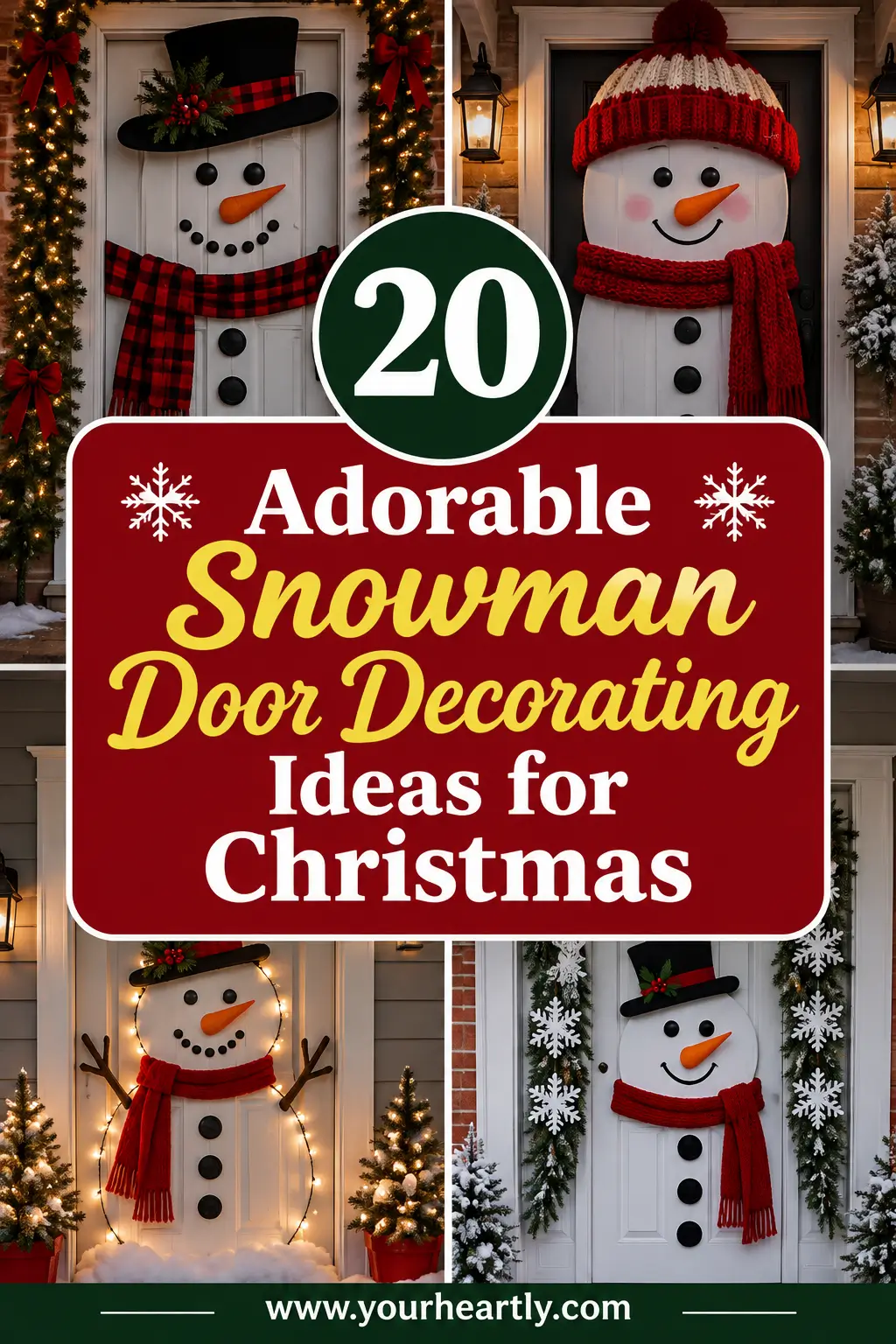


A smiling snowman on your front door can make an ordinary entrance feel like the beginning of a Christmas story. It is a cheerful alternative to a traditional wreath, especially if you enjoy playful decorations that children and visiting family members can recognize immediately.
You can create a snowman from simple paper shapes, lightweight craft materials, felt or a reusable door hanger. There is no need to cover the entire door, and a small well-placed design can be particularly effective when your entrance is narrow.
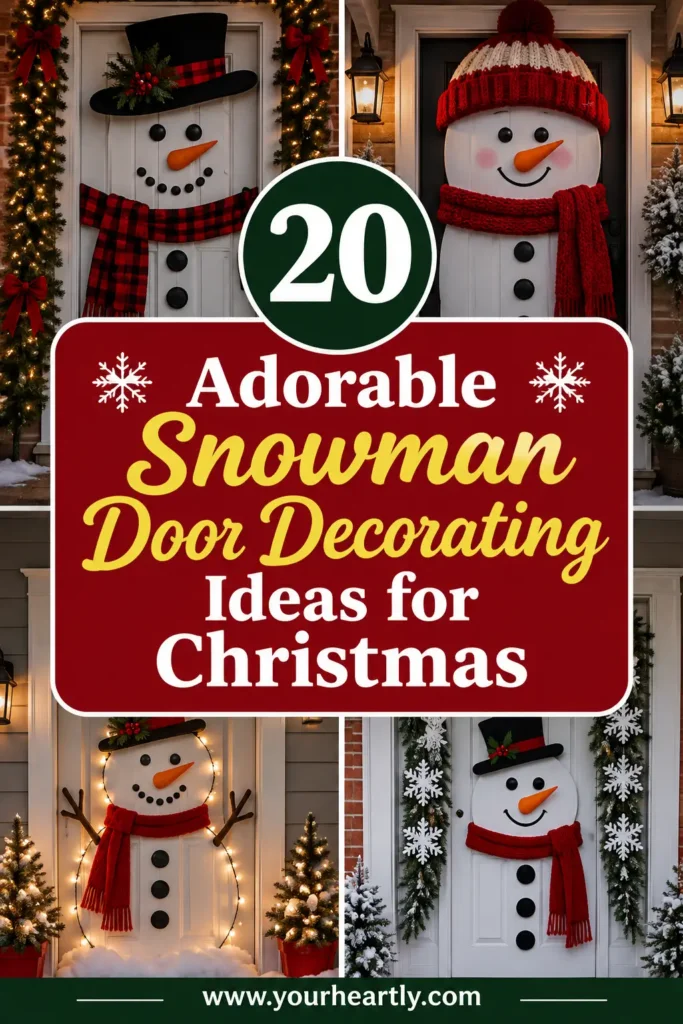
These snowman door decorating ideas range from classic top hats and checked scarves to pastel faces and playful winter characters. Use materials approved for your door finish and intended location.
Keep locks, handles, hinges, glazing and required exit visibility clear, and check any building restrictions before attaching your design. That way, you can enjoy the decoration without compromising everyday use.
1. Classic Three-Circle Snowman
The focus here is on three white circles, a black top hat and a carrot-orange nose. You can let these features establish the mood and keep the surrounding details much simpler so the main design remains easy to appreciate.
To establish the composition, cut lightweight removable shapes and arrange them vertically on an approved decorative door surface. Next, add black button shapes, a curved smile and a red scarf from contrasting paper for an additional layer of visual interest.
Sketch the figure on paper before cutting the larger pieces, especially if you are working around raised door panels. You can adjust the width and height until the character fits without interfering with the door hardware.
One way to make the look feel personal is to scale the figure to leave the handle, lock and any required glazing clear. Start with the widest circle and reduce the two upper circles gradually for a familiar snowman silhouette.
Consider the color of your existing door before selecting the background. A white figure stands out on a dark door, while a light-colored entrance may need an outlined silhouette or a contrasting removable panel.
2. Minimal Snowman Face
You can give your seasonal design a distinctive character with two charcoal eyes, a carrot nose and a cheerful dotted smile. The relationship between the main shapes, colors and surrounding space is what makes the finished look feel intentional.
For a straightforward approach, place the face within a compact area of a white door instead of covering the entire surface. When you are happy with the overall balance, add two curved eyebrows and a narrow hat shape if there is room.
Sketch the figure on paper before cutting the larger pieces, especially if you are working around raised door panels. You can adjust the width and height until the character fits without interfering with the door hardware.
One way to make the look feel personal is to use removable vinyl approved for the door finish for a crisp modern result. A short curved smile often looks more expressive than filling the face with numerous decorative marks.
Arrange the pieces on a flat surface first so you can test the facial expression and spacing. Slightly changing the position of the eyes or the tilt of the scarf can give your character a different personality.
3. Buffalo Plaid Scarf Snowman
You can give your seasonal design a distinctive character with a neutral white figure with a red and black checked scarf. The relationship between the main shapes, colors and surrounding space is what makes the finished look feel intentional.
To bring the idea to life, build a simple snowman from lightweight foam or paper shapes on a removable backing. Once that foundation is in place, cut the scarf with uneven tails and add a few drawn fringe lines.
Check that the installed decoration cannot obstruct locks, handles, hinges, required windows or safe exit operation. A removable display on a nearby wall is a good alternative if door restrictions make mounting unsuitable.
To finish the design, repeat the check only on the scarf so the face remains easy to read. A simple white fringe at the end of the plaid scarf makes it look like a folded textile.
If your entrance is exposed to weather, select materials and attachments rated for that setting. A sheltered interior door can accommodate delicate paper artwork that would not be suitable outdoors in rain or wind.
4. Snowman Wreath Trio
Begin by imagining three graduated circular wreath forms arranged like a snow figure as the foundation of your design. Once you have settled on that visual direction, the smaller choices become much easier to make without overwhelming the look.
Plan the arrangement around its strongest feature: connect lightweight wreath rings to a secure door-safe hanger following its weight limit. Follow that by taking time to dress the smallest ring with a felt top hat and add a ribbon between the upper rings.
Use the decoration as a small family craft by letting each person choose a color or draw a detail. For young children, offer large age-appropriate materials and keep small loose components out of reach.
For a slightly different interpretation, choose white mesh or washable faux greenery rather than heavy fragile ornaments. The gaps inside each wreath ring give the figure an airy silhouette that suits a darker door.
Sketch the figure on paper before cutting the larger pieces, especially if you are working around raised door panels. You can adjust the width and height until the character fits without interfering with the door hardware.
5. Snowman Door Hanger with Earmuffs
Begin by imagining a rounded snowman portrait framed by colorful earmuffs as the foundation of your design. Once you have settled on that visual direction, the smaller choices become much easier to make without overwhelming the look.
For the initial layout, cut the head from a lightweight craft board and paint on friendly facial details. After checking the proportions, add two felt circles joined by a curved band and a short fabric scarf.
Sketch the figure on paper before cutting the larger pieces, especially if you are working around raised door panels. You can adjust the width and height until the character fits without interfering with the door hardware.
As you refine the idea, attach a suitable hanger and avoid loose parts that could catch in the door. Matching earmuff shapes can be cut together so the finished portrait looks balanced.
If your entrance is exposed to weather, select materials and attachments rated for that setting. A sheltered interior door can accommodate delicate paper artwork that would not be suitable outdoors in rain or wind.
6. Gingerbread Snowman Door Art
This idea brings together a cookie-colored snowman outlined with white icing-inspired details for a cohesive seasonal look. Rather than collecting as many decorative details as possible, make those elements the main feature of the composition.
For a straightforward approach, paint a simple brown snow figure on a removable craft backing. When you are happy with the overall balance, draw scalloped cuff lines and add candy-colored button shapes.
Take the pieces down carefully according to the attachment instructions when the season is over. Flat reusable components can be stored together so you can update the snowman with a different scarf or hat next year.
Before you call it finished, use a gingham ribbon to echo a gingerbread kitchen theme. White icing lines around the edge will distinguish the gingerbread theme from an ordinary brown snowman.
Sketch the figure on paper before cutting the larger pieces, especially if you are working around raised door panels. You can adjust the width and height until the character fits without interfering with the door hardware.
7. Snowman Family Door Display
Begin by imagining three differently sized snow figures wearing individual winter accessories as the foundation of your design. Once you have settled on that visual direction, the smaller choices become much easier to make without overwhelming the look.
Focus on the largest shapes first and arrange a tall snowman beside two shorter figures in a compact lower-door design. With the main elements established, give each figure a unique scarf and hat with drawn names if desired.
Choose flat, lightweight details for a door that opens and closes frequently. A few bold shapes will be easier to recognize from the walkway than numerous small accessories crowded around the figure.
For a slightly different interpretation, maintain a clear strip around the operating edges of the door. Place the tallest character slightly behind the others to suggest a friendly family grouping.
Consider the color of your existing door before selecting the background. A white figure stands out on a dark door, while a light-colored entrance may need an outlined silhouette or a contrasting removable panel.
8. Pastel Pink Snowman
Picture a white snow figure with blush pink accessories and soft gray details working together in a display that feels considered rather than crowded. The appeal comes from the way the different details complement each other instead of competing for attention.
For the initial layout, make a simple snowman silhouette and add a curved pink scarf with small dot patterns. After checking the proportions, replace the black hat with a pale pink beanie and use charcoal for the face.
Choose flat, lightweight details for a door that opens and closes frequently. A few bold shapes will be easier to recognize from the walkway than numerous small accessories crowded around the figure.
One way to make the look feel personal is to add a small mint or cream accent to soften the palette. Dark gray facial features are less stark than pure black against the gentle blush palette.
Consider the color of your existing door before selecting the background. A white figure stands out on a dark door, while a light-colored entrance may need an outlined silhouette or a contrasting removable panel.
9. Frosty Blue Snowman
You can give your seasonal design a distinctive character with a snowy white face, icy blue scarf and silver snowflake accents. The relationship between the main shapes, colors and surrounding space is what makes the finished look feel intentional.
Focus on the largest shapes first and place the face on a pale blue removable backing with plenty of empty space around it. With the main elements established, add layered blue strips for the scarf and a simple folded hat shape.
Take the pieces down carefully according to the attachment instructions when the season is over. Flat reusable components can be stored together so you can update the snowman with a different scarf or hat next year.
One way to make the look feel personal is to choose matte silver details so the light catches them without overpowering the design. A simple blue-and-white contrast works especially well when the door is already painted a neutral color.
Arrange the pieces on a flat surface first so you can test the facial expression and spacing. Slightly changing the position of the eyes or the tilt of the scarf can give your character a different personality.
10. Rustic Wooden Snowman Hanger
Begin by imagining a lightweight wood-look figure with painted buttons and a checked bow as the foundation of your design. Once you have settled on that visual direction, the smaller choices become much easier to make without overwhelming the look.
For a straightforward approach, paint a thin craft wood shape in off-white and draw a smiling face with black paint. When you are happy with the overall balance, attach a short twine accent and a fabric bow using suitable craft adhesive.
If your entrance is exposed to weather, select materials and attachments rated for that setting. A sheltered interior door can accommodate delicate paper artwork that would not be suitable outdoors in rain or wind.
One way to make the look feel personal is to seal the finished piece if it is intended for sheltered outdoor use. A lightly distressed edge can make the wooden-look piece feel like a collected seasonal keepsake.
Check that the installed decoration cannot obstruct locks, handles, hinges, required windows or safe exit operation. A removable display on a nearby wall is a good alternative if door restrictions make mounting unsuitable.
11. Snowman with a Gift Stack
For this idea, concentrate on a friendly snow figure holding a colorful pile of parcels. The contrast between these elements creates interest on its own, so you can keep the remaining parts of the design deliberately understated.
To establish the composition, draw the snowman beside three staggered rectangular package shapes on a removable panel. Next, decorate the boxes with stripes and ribbon loops using three colors for an additional layer of visual interest.
Arrange the pieces on a flat surface first so you can test the facial expression and spacing. Slightly changing the position of the eyes or the tilt of the scarf can give your character a different personality.
One way to make the look feel personal is to position the packages close to the figure so nothing extends into the door frame. The diagonal tops of the packages suggest a slightly wobbly pile without requiring realistic perspective.
If your entrance is exposed to weather, select materials and attachments rated for that setting. A sheltered interior door can accommodate delicate paper artwork that would not be suitable outdoors in rain or wind.
12. Melted Snowman Door Design
This idea brings together a whimsical puddle, tilted carrot nose and scattered buttons for a cohesive seasonal look. Rather than collecting as many decorative details as possible, make those elements the main feature of the composition.
Begin with the main structure: cut an irregular white puddle shape and place a flat snowman face within it. Then add a displaced top hat and short drawn stick arms at playful angles to give the arrangement a little more depth and definition.
Check that the installed decoration cannot obstruct locks, handles, hinges, required windows or safe exit operation. A removable display on a nearby wall is a good alternative if door restrictions make mounting unsuitable.
As you refine the idea, keep the joke as a small lower-panel arrangement instead of a floor obstruction. A sideways hat and a carrot nose pointed toward the puddle communicate the joke clearly.
If your entrance is exposed to weather, select materials and attachments rated for that setting. A sheltered interior door can accommodate delicate paper artwork that would not be suitable outdoors in rain or wind.
13. Snowman Peeking Around the Edge
The focus here is on a partial face and mitten appearing from one side of the door. You can let these features establish the mood and keep the surrounding details much simpler so the main design remains easy to appreciate.
Plan the arrangement around its strongest feature: cut half of a snowman head and place its flat edge near a safe fixed panel boundary. Follow that by taking time to add a surprised smile, a small carrot nose and a mitten shape.
Consider the color of your existing door before selecting the background. A white figure stands out on a dark door, while a light-colored entrance may need an outlined silhouette or a contrasting removable panel.
To finish the design, leave hinges and the closing edge entirely unobstructed. A half-visible mitten makes the peeking character feel animated without filling the entire door.
Use the decoration as a small family craft by letting each person choose a color or draw a detail. For young children, offer large age-appropriate materials and keep small loose components out of reach.
14. Snowman with Twinkling Stars
This idea brings together a simple snowman surrounded by little star and snowflake silhouettes for a cohesive seasonal look. Rather than collecting as many decorative details as possible, make those elements the main feature of the composition.
Begin with the main structure: place a compact figure on a dark removable background and scatter white shapes around it. Then make the stars smaller toward the edges to suggest a snowy evening to give the arrangement a little more depth and definition.
If your entrance is exposed to weather, select materials and attachments rated for that setting. A sheltered interior door can accommodate delicate paper artwork that would not be suitable outdoors in rain or wind.
For a more considered result, use paper stars rather than powered lights on a frequently moving door. Stars placed loosely around the snowman suggest a chilly evening sky rather than a rigid border.
Arrange the pieces on a flat surface first so you can test the facial expression and spacing. Slightly changing the position of the eyes or the tilt of the scarf can give your character a different personality.
15. Vintage Top Hat Snowman
Begin by imagining a warm ivory snow figure with a tall black hat and muted burgundy scarf as the foundation of your design. Once you have settled on that visual direction, the smaller choices become much easier to make without overwhelming the look.
You can start small and build the look in stages: draw a classic rounded face and give the hat a narrow gold-colored band. As the next step, add a few holly-inspired leaves and softly shaded buttons to the craft panel.
Arrange the pieces on a flat surface first so you can test the facial expression and spacing. Slightly changing the position of the eyes or the tilt of the scarf can give your character a different personality.
One way to make the look feel personal is to use cream instead of bright white for a nostalgic appearance. A narrow hat band is enough to give the vintage snowman a dressed-up look.
Take the pieces down carefully according to the attachment instructions when the season is over. Flat reusable components can be stored together so you can update the snowman with a different scarf or hat next year.
16. Snowman with Button Garland
Begin by imagining a rounded snowman wearing a row of oversized illustrated buttons as the foundation of your design. Once you have settled on that visual direction, the smaller choices become much easier to make without overwhelming the look.
To bring the idea to life, draw or cut colorful button circles in different sizes and arrange them down the body. Once that foundation is in place, add a simple scarf and tiny stitch marks around the circles.
Sketch the figure on paper before cutting the larger pieces, especially if you are working around raised door panels. You can adjust the width and height until the character fits without interfering with the door hardware.
As you refine the idea, use flat paper buttons rather than small detachable pieces where children play. A repeated stitched border around the illustrated buttons makes them look intentionally handmade.
Arrange the pieces on a flat surface first so you can test the facial expression and spacing. Slightly changing the position of the eyes or the tilt of the scarf can give your character a different personality.
17. Snowman Postal Helper
Imagine a design built around a snowman holding a little envelope with a seasonal greeting. It is a lovely way to introduce a seasonal touch while giving each of the important elements enough room to show its individual character.
For the initial layout, place a paper envelope silhouette beside a mitten and add a tiny drawn stamp. After checking the proportions, give the figure a knitted hat and an understated scarf.
Check that the installed decoration cannot obstruct locks, handles, hinges, required windows or safe exit operation. A removable display on a nearby wall is a good alternative if door restrictions make mounting unsuitable.
For the finishing touch, write a short welcome message in clear lettering rather than adding a long paragraph. The envelope can carry a simple hand-drawn snowflake if you prefer not to include words.
Sketch the figure on paper before cutting the larger pieces, especially if you are working around raised door panels. You can adjust the width and height until the character fits without interfering with the door hardware.
18. Neutral Scandinavian Snowman
For this idea, concentrate on an off-white snow figure with natural kraft and gray accents. The contrast between these elements creates interest on its own, so you can keep the remaining parts of the design deliberately understated.
For a straightforward approach, cut a clean silhouette from sturdy cream paper or a light craft board. When you are happy with the overall balance, add a taupe scarf, a few dots and a small simple hat without excessive detail.
If your entrance is exposed to weather, select materials and attachments rated for that setting. A sheltered interior door can accommodate delicate paper artwork that would not be suitable outdoors in rain or wind.
For a slightly different interpretation, choose one wood-toned element to connect the display with a neutral entryway. A subtle taupe scarf blends beautifully with wood-look planters and neutral porch accessories.
Take the pieces down carefully according to the attachment instructions when the season is over. Flat reusable components can be stored together so you can update the snowman with a different scarf or hat next year.
19. Snowman in a Christmas Sweater
For this idea, concentrate on a round figure wearing a playful geometric sweater. The contrast between these elements creates interest on its own, so you can keep the remaining parts of the design deliberately understated.
For the initial layout, create a wide sweater shape with patterned bands and a white snowman head above it. After checking the proportions, draw rows of small trees, snowflakes or zigzags in muted festive colors.
Use the decoration as a small family craft by letting each person choose a color or draw a detail. For young children, offer large age-appropriate materials and keep small loose components out of reach.
One way to make the look feel personal is to keep patterns broad enough to be visible from across the porch. A single repeated zigzag or tree pattern is usually enough to make the sweater recognizable.
Sketch the figure on paper before cutting the larger pieces, especially if you are working around raised door panels. You can adjust the width and height until the character fits without interfering with the door hardware.
20. Reusable Felt Snowman Panel
Begin by imagining a soft felt figure with interchangeable hats, scarves and noses as the foundation of your design. Once you have settled on that visual direction, the smaller choices become much easier to make without overwhelming the look.
For the initial layout, assemble flat felt components on a lightweight removable fabric or board backing. After checking the proportions, use age-appropriate secure fasteners for the interchangeable accessories.
Consider the color of your existing door before selecting the background. A white figure stands out on a dark door, while a light-colored entrance may need an outlined silhouette or a contrasting removable panel.
For the finishing touch, store the spare pieces together in a labeled bag for next season. Use a common attachment layout for interchangeable components so you can swap accessories without rebuilding the figure.
Arrange the pieces on a flat surface first so you can test the facial expression and spacing. Slightly changing the position of the eyes or the tilt of the scarf can give your character a different personality.
Final Thoughts
A snowman door decoration can be as simple as a smiling face or as creative as a complete winter character with its own accessories. The best option is the one that suits your entrance, your available materials and the amount of time you want to spend crafting.
Start with an easy shape and add details slowly. A carefully chosen scarf color, hat or set of buttons can give your snowman more personality than a complicated background.
Make sure the finished artwork is lightweight, securely attached and compatible with the door. By keeping the practical details in mind, you can enjoy a welcoming Christmas entrance that is easy to remove when the season changes.