

Have you ever felt like your relationship was becoming too overwhelming, only to wonder whether spending less time together would help or hurt your connection? You’re not alone.
Many couples struggle to find the right balance between togetherness and independence. One partner may want more closeness, while the other may crave a little breathing room.
The phrase “giving space” often creates fear. You might immediately think that distance means someone is losing interest or preparing to leave the relationship.
In reality, healthy space can sometimes strengthen emotional bonds rather than weaken them. The key lies in understanding the difference between intentional space and emotional withdrawal.
You may have noticed couples who spend every moment together eventually feeling exhausted. At the same time, couples who become too distant often lose their emotional connection. Relationships aren’t built on constant closeness or complete independence. They thrive when both people feel connected while still maintaining their individuality.
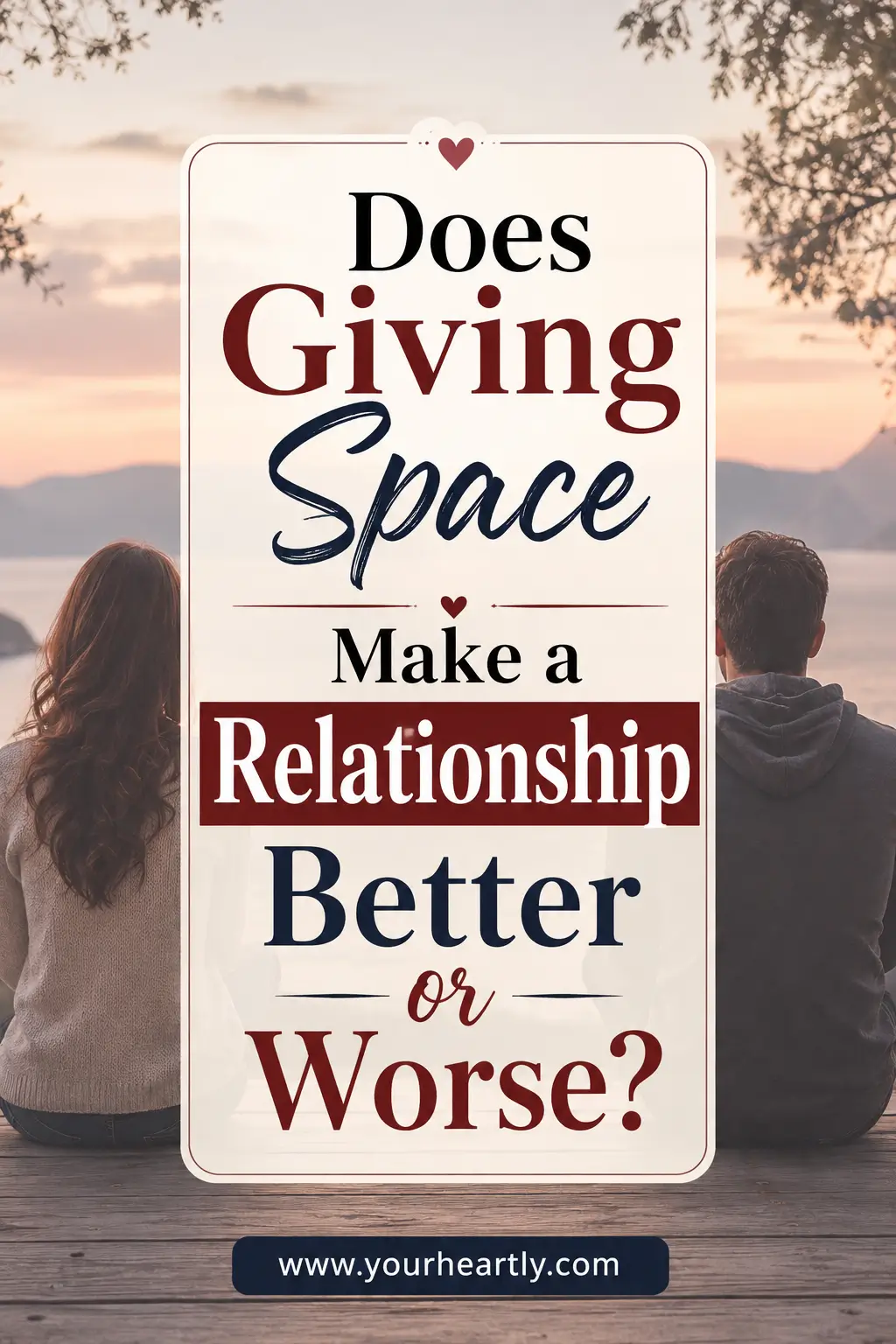
So, does giving space make a relationship better or worse?
The answer isn’t as simple as yes or no. It depends on how, why, and when that space is created.
What Does Giving Space Actually Mean?
Giving space doesn’t mean ending communication or disappearing for days. It simply means allowing each person to maintain their individuality while remaining emotionally connected.
Healthy space creates room for personal growth, hobbies, friendships, careers, and self-refploration. It allows you to continue developing as an individual without sacrificing your relationship.
Many people mistakenly associate space with rejection. They assume their partner wants distance because something is wrong.
In reality, some people need occasional solitude to recharge emotionally. This has nothing to do with love or commitment.
Think about a healthy garden. Plants need enough room to grow, absorb sunlight, and develop strong roots.
Relationships work in a similar way. When two people become emotionally dependent on each other for every need, growth often becomes limited.
Giving space means respecting personal boundaries while continuing to nurture emotional intimacy. Both partners remain connected, but neither feels trapped.
When you understand this difference, the idea of space becomes much less frightening.
How Healthy Space Can Make a Relationship Better
One of the biggest advantages of giving space is that it encourages personal growth. When you continue pursuing your interests, you bring new energy into your relationship.
You become more interesting to your partner because you’re constantly learning, experiencing, and evolving. Your conversations become richer and more meaningful.
Healthy space also reduces emotional exhaustion. Spending every free moment together can eventually create feelings of pressure.
Having time apart allows you to recharge mentally and emotionally. When you reconnect, you often appreciate each other’s company more.
I once heard a woman describe her marriage after twenty years together. She explained that both she and her husband maintained separate hobbies throughout their relationship.
She enjoyed painting while he spent weekends cycling with friends. Instead of weakening their marriage, those independent activities gave them fresh experiences to share.
Space can also strengthen trust. When you stop monitoring every movement and conversation, you demonstrate confidence in your partner.
Trust creates emotional security. Emotional security creates stronger relationships.
Sometimes, missing someone is exactly what reminds you how important they truly are.
When Giving Space Can Make a Relationship Worse
Space becomes harmful when it’s used to avoid problems. Emotional distance disguised as “needing space” can quickly damage a relationship.
Some people ask for space because they don’t want to discuss conflict. Instead of solving issues, they simply withdraw.
Avoidance rarely fixes anything. Unresolved problems usually become larger over time.
Communication often begins to decline during unhealthy periods of separation. Text messages become shorter, phone calls become less frequent, and emotional intimacy slowly disappears.
This pattern creates anxiety. You may start questioning whether your partner still cares.
Space can also become damaging when expectations aren’t clearly discussed. One person may believe they’re taking a short break, while the other feels abandoned.
Uncertainty creates emotional stress. Without clear boundaries, misunderstandings multiply quickly.
Another common problem is using space as a punishment. Giving someone the silent treatment isn’t healthy independence.
Healthy space creates freedom. Emotional punishment creates pain.
The difference between the two is communication, respect, and mutual understanding.
Signs Your Relationship Needs More Space
Constant arguments can sometimes indicate that you and your partner need more personal time. Small disagreements often become larger when emotional fatigue sets in.
You may notice yourself becoming irritated by habits that never bothered you before. This can be a sign that you’re feeling overwhelmed.
Another warning sign is losing your sense of identity. Perhaps you’ve stopped spending time with friends or abandoned activities you once enjoyed.
Healthy relationships should add to your life rather than replace it completely. Maintaining your individuality remains essential.
Feeling guilty about wanting alone time is another indicator. Everyone needs opportunities to recharge.
You might also notice that your entire emotional well-being depends on your partner’s availability. If a delayed text message ruins your entire day, emotional dependence may be developing.
Some couples spend so much time together that they unintentionally create pressure. Every moment begins revolving around the relationship.
Temporary space can help restore balance. It allows both partners to reconnect with themselves before reconnecting with each other.
Recognizing these signs early can prevent future relationship problems.
How to Give Space Without Damaging Your Relationship
The most important step is communicating openly. Never assume your partner understands what you mean when you ask for space.
Explain your reasons clearly and honestly. Reassure your partner that your need for personal time isn’t a sign of rejection.
Setting expectations is equally important. Discuss how often you’ll communicate and how much time you’ll spend apart.
Clear boundaries eliminate confusion. They also reduce unnecessary anxiety.
It’s also helpful to continue expressing affection. Space shouldn’t eliminate emotional connection.
A simple text message, phone call, or thoughtful gesture can maintain closeness while respecting boundaries.
Avoid completely disappearing. Healthy space involves maintaining communication, even if it’s less frequent.
Use your personal time productively. Reconnect with hobbies, spend time with family, exercise, or pursue personal goals.
When you eventually come back together, focus on creating meaningful moments. Quality often matters more than quantity.
Giving space should never feel like losing a relationship. It should feel like strengthening it.
How Much Space Is Too Much?
There isn’t a universal rule for how much space every couple needs. Relationships aren’t one-size-fits-all.
Some couples enjoy spending most of their time together. Others prefer greater independence.
The right balance depends on your personalities, communication styles, and emotional needs. What works for one couple may not work for another.
The real question isn’t how much space you’re creating. The question is whether that space is improving or weakening your emotional connection.
If you feel more refreshed, happier, and more appreciative after spending time apart, the arrangement is probably healthy.
If you feel anxious, disconnected, and emotionally neglected, adjustments may be necessary.
Pay attention to how your relationship feels rather than comparing it with other couples. Every partnership develops its own rhythm.
Remember that your needs may also change over time. A new job, parenthood, stress, or major life changes can influence how much personal space you require.
Flexibility often becomes the secret ingredient in long-lasting relationships.
Conclusion
Giving space doesn’t automatically make a relationship better or worse. The outcome depends entirely on how that space is used. Healthy distance encourages growth, trust, independence, and appreciation. Unhealthy distance creates confusion, avoidance, and emotional disconnection. The goal isn’t to spend less time together. The goal is to create a relationship where both people can grow individually while remaining deeply connected. When communication, trust, and respect guide your decisions, giving space can become one of the healthiest things you do for your relationship.