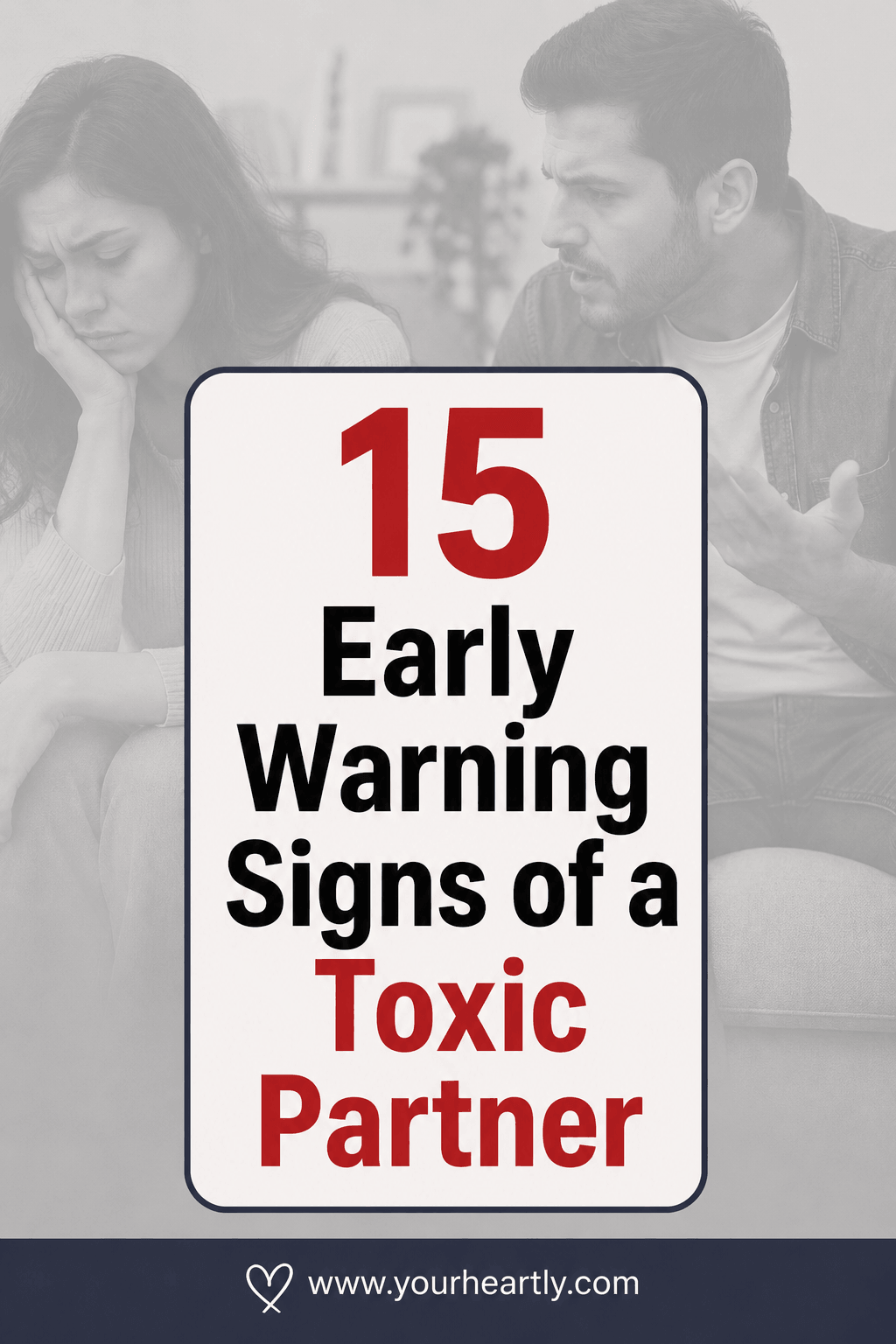
Heartbreak rarely arrives without warning. Looking back, most people can point to small moments that hinted at what was coming.
At the time, those moments often felt easy to explain away.
You liked the person. You wanted things to work. So you gave them the benefit of the doubt, again and again.

That instinct isn’t a flaw. It actually comes from a good place, from hope, patience, and a genuine desire for connection.
But some patterns tend to lead to the same painful ending, no matter how much love or effort you put in. Recognizing them early can save you months, or even years, of unnecessary pain.
This article is here to help you spot those patterns before they turn into heartbreak. Think of it as a gentle, honest guide, not a list to make you fearful of dating.
You’ll find fifteen common red flags that tend to predict a painful ending. Some are about how a person treats you. Others are about how they treat themselves, or how they show up in the relationship over time.
None of these signs guarantee heartbreak on their own. But when you notice a pattern forming, it’s worth paying close attention.
You deserve a relationship that feels safe, steady, and genuinely fulfilling. Let’s walk through these red flags together, so you can protect your heart while still staying open to real love.
1. They Keep You in Emotional Limbo
Some relationships never quite become official, yet never quite end either. This in-between space can feel confusing and painful over time.
You might hear phrases like, “let’s just see where things go,” repeated for months without any real progress.
This pattern often benefits one person more than the other. It allows them to enjoy closeness and attention without offering real commitment in return.
Meanwhile, you may find yourself waiting, hoping, and quietly adjusting your expectations. That waiting can slowly chip away at your confidence and self-worth.
Notice how long this uncertain phase has lasted. Weeks are understandable, but months of ambiguity are worth questioning.
Ask yourself how this uncertainty makes you feel day to day. Do you feel secure, or do you feel anxious and unsure where you stand?
A partner who truly values you will work toward clarity, not avoid it. Real commitment usually becomes visible through consistent action, not just words.
Limbo relationships often end painfully, once the imbalance becomes impossible to ignore. The person waiting is usually the one left heartbroken.
Give yourself permission to ask for clarity directly. You deserve to know where you stand, sooner rather than later.
Protect your heart by setting a reasonable timeline for answers.
2. They Only Show Up When It’s Convenient
Some people are wonderful during the fun, easy moments. But they quietly disappear the moment things become inconvenient or difficult.
This might look like attentiveness during date nights, paired with silence during a hard week at work.
Notice whether their support feels consistent, or whether it seems to depend entirely on their own mood and schedule. This pattern often reveals deeper priorities.
A partner who’s genuinely invested will show up during both the easy and the difficult moments. Real care doesn’t disappear when things get inconvenient.
Pay attention to how they respond when you need actual support. Do they make an effort, or do excuses suddenly appear?
This kind of convenience-based attention can feel great at first. But it often leaves you feeling alone during the moments that matter most.
Over time, this imbalance tends to breed resentment and disappointment. Heartbreak often follows once you realize the support was never truly reliable.
Notice if you’ve started expecting less from them during hard times. That adjustment is worth reflecting on seriously.
You deserve a partner who shows up consistently, not selectively. Reliable care, even during ordinary or difficult moments, is a genuine sign of love.
3. They Compare You to Past Partners
Occasional references to the past are normal in any relationship. But frequent, unfavorable comparisons to previous partners are a serious red flag.
This might sound like subtle digs about your cooking, your habits, or how you handle certain situations.
These comparisons can slowly damage your confidence and sense of self-worth. Over time, you may start feeling like you’re constantly competing with someone else’s memory.
Notice how often these comparisons happen, and how they make you feel afterward. Do you feel appreciated for who you are, or subtly inadequate?
A partner who has genuinely moved on won’t need to bring up the past this often. Comparisons usually reveal unresolved feelings or unrealistic expectations.
This pattern often leads to heartbreak because it prevents genuine appreciation for who you actually are. You end up feeling like a placeholder rather than a priority.
It’s fair to express how these comments affect you. A caring partner will listen and adjust their behavior with sincerity.
If the comparisons continue despite your feedback, take this seriously. It often signals a deeper unwillingness to fully invest in your relationship.
You deserve to be loved for exactly who you are.
4. They Avoid Vulnerability
Emotional intimacy requires a willingness to be open, honest, and occasionally vulnerable. If someone consistently avoids this, connection often stays shallow.
This might look like deflecting deep conversations with jokes, or changing the subject whenever emotions come up.
Notice whether they share their genuine thoughts and feelings, or whether conversations stay surface level most of the time. Real closeness requires some emotional risk from both people.
Avoiding vulnerability can stem from past hurt, fear, or discomfort with intimacy. These feelings are understandable, but they still affect the relationship significantly.
Pay attention to whether they show any willingness to grow in this area over time. Small steps toward openness are a good sign.
Complete, consistent avoidance often leads to disconnect and eventual heartbreak. Without vulnerability, relationships struggle to deepen into something truly meaningful.
You may find yourself doing most of the emotional heavy lifting in the relationship. That imbalance can become exhausting and lonely over time.
Notice how this affects your own sense of closeness and satisfaction. True intimacy requires both people to show up honestly.
Encourage openness gently, but don’t ignore a consistent pattern of emotional distance.
5. They Keep Parts of Their Life Hidden From You
Everyone deserves some privacy, and that’s completely healthy. But secrecy about significant parts of someone’s life is a different, more concerning issue.
This might include being vague about their whereabouts, avoiding questions about their friendships, or keeping their phone unusually guarded.
Notice the difference between normal privacy and deliberate concealment. Privacy respects boundaries, while secrecy often hides something specific.
Pay attention to inconsistencies in what they tell you about their daily life. Small contradictions can sometimes point to bigger issues underneath.
Secrecy often creates a foundation of doubt and anxiety within the relationship. Over time, this uncertainty can become genuinely exhausting to carry.
A partner who’s building something real with you will generally be open about their life. Transparency, within reason, supports trust and closeness.
This pattern frequently leads to heartbreak once hidden information eventually comes to light. Discovering concealed truths later on can feel like a significant betrayal.
Trust your instincts if something about their openness feels consistently off. That feeling is worth paying attention to.
You deserve a relationship built on honesty, not one clouded by unnecessary secrecy.
6. They Struggle With Consistency Between Words and Actions
Words are important, but actions ultimately reveal the truth. If someone’s promises rarely match their follow-through, take this pattern seriously.
This might look like grand declarations of love, paired with behavior that doesn’t reflect real effort or commitment.
Notice the gap between what they say and what they actually do over time. Genuine intentions usually show up consistently in daily actions.
Pay attention to small commitments, not just big romantic gestures. Reliability in little things often predicts reliability in bigger ones.
This inconsistency can create confusion, since the words themselves often sound sincere and convincing. It becomes easy to focus on promises rather than patterns.
Over time, unmet promises tend to accumulate into genuine disappointment. Heartbreak often follows once you realize the words were never fully backed by action.
Ask yourself honestly whether their behavior matches their language. Trust the pattern you observe, rather than the explanation you’re given.
A partner who values you will work to align their actions with their words. Genuine change looks like consistent effort, not repeated apologies alone.
Protect your heart by watching closely, rather than simply listening closely.
7. They Make You Feel Responsible for Their Emotions
Supporting a partner emotionally is a normal, healthy part of any relationship. But feeling entirely responsible for someone else’s emotional state is a different, heavier burden.
This might look like being blamed for their bad mood, or feeling pressured to constantly manage their feelings.
Notice whether you feel like you’re walking on eggshells to avoid upsetting them. That kind of constant caution is exhausting and unsustainable.
A healthy partner takes ownership of their own emotional regulation. They may lean on you for support, but they won’t place the full weight on your shoulders.
This dynamic often develops gradually, making it hard to recognize at first. Over time, it can leave you feeling drained, anxious, and emotionally depleted.
Pay attention to how much of your energy goes toward managing their feelings. Genuine partnerships involve mutual support, not one-sided emotional labor.
This pattern frequently leads to heartbreak once burnout sets in. Constantly prioritizing someone else’s emotions can eventually cost you your own wellbeing.
Encourage healthy emotional independence within the relationship. A caring partner will want you to feel supported too, not depleted.
Your emotional energy deserves protection and balance.
8. They Show Signs of a Wandering Eye
Flirting with others while in a committed relationship is a clear and painful red flag. This behavior often signals deeper issues with respect and boundaries.
This might include excessive attention to others in social settings, or maintaining flirtatious relationships outside the relationship.
Notice how they behave around others, both in person and through their online interactions. Respectful boundaries should remain consistent regardless of the setting.
Pay attention to how they respond if you express discomfort about this behavior. A caring partner will take your feelings seriously and adjust accordingly.
Dismissiveness or defensiveness about this issue is a significant warning sign. It often indicates a lack of respect for the relationship and your feelings.
This pattern frequently leads directly to heartbreak, whether through emotional betrayal or eventual infidelity. Trust, once broken this way, is often difficult to rebuild.
Trust your instincts if you notice consistent behavior that crosses your comfort level. Your feelings about this are valid and important.
You deserve a partner who prioritizes your relationship and respects clear boundaries. Genuine commitment includes consistent respect, both publicly and privately.
Protect yourself by addressing this pattern directly and honestly.
9. They Struggle to Celebrate Your Success
A loving partner should feel genuine joy when you succeed. If someone consistently struggles to celebrate your achievements, this deserves attention.
This might look like lukewarm reactions, subtle competitiveness, or quickly shifting focus back to themselves.
Notice how they respond when you share good news or personal wins. Do they express genuine enthusiasm, or does the moment feel oddly deflated?
This pattern can sometimes stem from insecurity or unresolved feelings about their own life. Understandable as that may be, it still affects the relationship significantly.
Over time, this lack of celebration can leave you feeling unsupported in meaningful moments. You may even start downplaying your own achievements to avoid tension.
Pay attention to whether this pattern shows any improvement over time. Genuine growth and self-awareness are encouraging signs.
Consistent difficulty celebrating your success often leads to quiet resentment and disconnection. Eventually, this can contribute significantly to heartbreak.
You deserve a partner who feels genuinely proud of your accomplishments. Real love includes celebrating both the big and small victories together.
Notice how this pattern affects your own confidence and joy.
10. They Rely on You to Fix Their Problems
Supporting a partner through challenges is a normal part of any relationship. But consistently being expected to fix their problems is a different, heavier dynamic.
This might include repeatedly bailing them out financially, emotionally, or logistically without much change over time.
Notice whether they show genuine effort to address their own challenges. Support should complement personal responsibility, not replace it entirely.
Pay attention to how draining this pattern feels over time. Constant problem-solving on someone else’s behalf can quickly become exhausting.
This dynamic often creates an imbalance where one partner gives significantly more than they receive. That imbalance is rarely sustainable in the long run.
Heartbreak frequently follows once resentment builds from this uneven dynamic. Feeling used, even unintentionally, is a painful realization to reach.
Encourage healthy independence and personal accountability within the relationship. A caring partner will want to grow, not simply rely on you indefinitely.
Notice your own limits and communicate them clearly when needed. You are not responsible for solving every challenge in someone else’s life.
Protect your energy by maintaining healthy, balanced support.
11. They Show Little Interest in Your Inner World
Genuine connection requires curiosity about each other’s thoughts, feelings, and experiences. If someone shows little interest in your inner world, this deserves attention.
This might look like surface-level conversations, or rarely asking follow-up questions about your feelings and experiences.
Notice how often they ask about your day, your dreams, or your genuine thoughts on things. Curiosity is often a clear sign of real investment.
Pay attention to how conversations typically flow between you. Does it feel mutual, or does it consistently center around them?
This pattern can leave you feeling unseen and unimportant over time. Genuine intimacy requires feeling truly known by your partner.
A lack of curiosity often points to a deeper lack of emotional investment. This pattern frequently leads to disconnection and eventual heartbreak.
Notice whether you find yourself sharing less over time, simply because it doesn’t feel reciprocated. That shift is worth reflecting on carefully.
You deserve a partner who’s genuinely curious about who you are. Real love includes wanting to know your inner world, not just your surface-level presence.
Protect your emotional energy by seeking mutual curiosity and care.
12. They Struggle to Maintain Boundaries With Others
Healthy relationships require clear boundaries, not just with each other, but with outside influences too. If someone struggles to maintain these boundaries, it deserves your attention.
This might include prioritizing a parent’s opinion over your relationship, or maintaining inappropriate closeness with an ex.
Notice how they handle situations where outside influence conflicts with your relationship. A partner should be able to advocate for your relationship when necessary.
Pay attention to whether outside opinions consistently take priority over your feelings and needs. This imbalance can create ongoing tension and hurt.
This pattern often stems from difficulty asserting independence or setting limits with others. Understandable as the root cause may be, it still affects your relationship deeply.
Over time, this can leave you feeling like a lower priority than outside relationships. That feeling often leads to resentment and eventual heartbreak.
Encourage open conversations about this pattern as it arises. A willing partner will work toward healthier boundaries with time and effort.
Notice if this pattern shows genuine improvement, or remains consistently unresolved. Growth here often predicts stronger commitment moving forward.
You deserve to feel like a genuine priority within the relationship.
13. They Avoid Conflict Entirely
Conflict avoidance might seem peaceful on the surface, but it often masks deeper issues. If someone avoids all disagreement, unresolved tension tends to build quietly underneath.
This might look like agreeing with everything you say, or quickly changing the subject during difficult conversations.
Notice whether real issues ever get addressed, or whether they simply get buried repeatedly. Avoided conflict doesn’t disappear, it just resurfaces later.
Pay attention to how this pattern affects the relationship’s overall depth and honesty. Genuine connection requires the ability to navigate disagreement together.
This avoidance often stems from fear of confrontation or discomfort with difficult emotions. These feelings are understandable, but still significant to address.
Over time, unresolved tension can quietly erode intimacy and trust. Heartbreak frequently follows once accumulated issues finally surface all at once.
Encourage gentle, honest communication as disagreements arise naturally. A willingness to engage, even imperfectly, is a good sign of growth.
Notice whether small issues get addressed early, or allowed to build indefinitely. Healthy conflict resolution protects the relationship’s long-term stability.
You deserve a relationship where honest conversations feel safe and possible.
14. They Struggle With Long-Term Reliability
Some people are wonderful in short bursts, but struggle to maintain consistency over the long term. This pattern often becomes clearer only with time.
This might look like enthusiastic effort early on, followed by a noticeable decline in attention and consistency.
Notice how their effort compares now to how it looked in the beginning. A natural settling is normal, but significant decline is worth addressing.
Pay attention to whether basic reliability, like communication and follow-through, remains steady over time. These small consistencies matter significantly in the long run.
This pattern can be difficult to recognize early, since initial effort often feels genuine and exciting. It usually becomes clearer only after several months.
Heartbreak often follows once the initial excitement fades and true patterns emerge. The person you fell for initially may not match who shows up later.
Notice how this shift affects your trust and sense of security. Long-term reliability is one of the clearest predictors of lasting compatibility.
Encourage honest conversations if you notice this decline happening. A committed partner will make genuine efforts to maintain consistency.
Protect your heart by watching patterns over months, not just weeks.
15. Something Inside You Keeps Warning You to Be Careful
Sometimes, the clearest red flag is a quiet, persistent feeling that something isn’t right. This intuition deserves genuine respect and attention.
You might not be able to fully explain the feeling, yet it keeps returning regardless.
Notice moments of unexplained anxiety, hesitation, or unease around this relationship. These feelings often reflect subtle patterns your conscious mind hasn’t fully processed yet.
Pay attention to how often you find yourself second-guessing or justifying certain behaviors. That repeated justification is often worth examining closely.
Talk openly with trusted friends or family about your feelings. An outside perspective can sometimes reveal patterns you’re too close to see clearly.
Journaling your feelings over time can also help clarify recurring themes. Written patterns are often easier to recognize than scattered daily thoughts.
You don’t need airtight proof to justify trusting your instincts. Your feelings are valid, even without a clear, logical explanation.
Give yourself permission to slow down and reflect honestly. There’s no rush to ignore your intuition simply to preserve a relationship.
Trust yourself here. Your intuition is often trying to protect you from heartbreak before it happens.
Final Thoughts
Heartbreak often follows a pattern, even when it feels sudden in the moment. Looking closely at these patterns can help you protect your heart before things go too far.
Recognizing these red flags doesn’t mean approaching every relationship with fear or suspicion.
It simply means staying honest with yourself about what you’re truly experiencing. Awareness gives you the power to make thoughtful, informed choices along the way.
Not every red flag guarantees heartbreak, and people can genuinely grow and change over time. But repeated patterns deserve real attention, rather than repeated excuses.
Trust yourself throughout this process, and lean on supportive friends and family when you need clarity. Outside perspectives often reveal things that are harder to see up close.
You deserve a relationship built on consistency, honesty, and genuine emotional investment. Settling for less, simply out of hope or habit, often leads to unnecessary pain down the road.
Use these fifteen red flags as a thoughtful guide, not a rigid checklist. Check in with yourself regularly as your relationship continues to grow and develop.
Your heart deserves protection, patience, and genuine care throughout this journey. Trust the patterns you observe, trust your own instincts, and know that lasting, healthy love is absolutely possible.