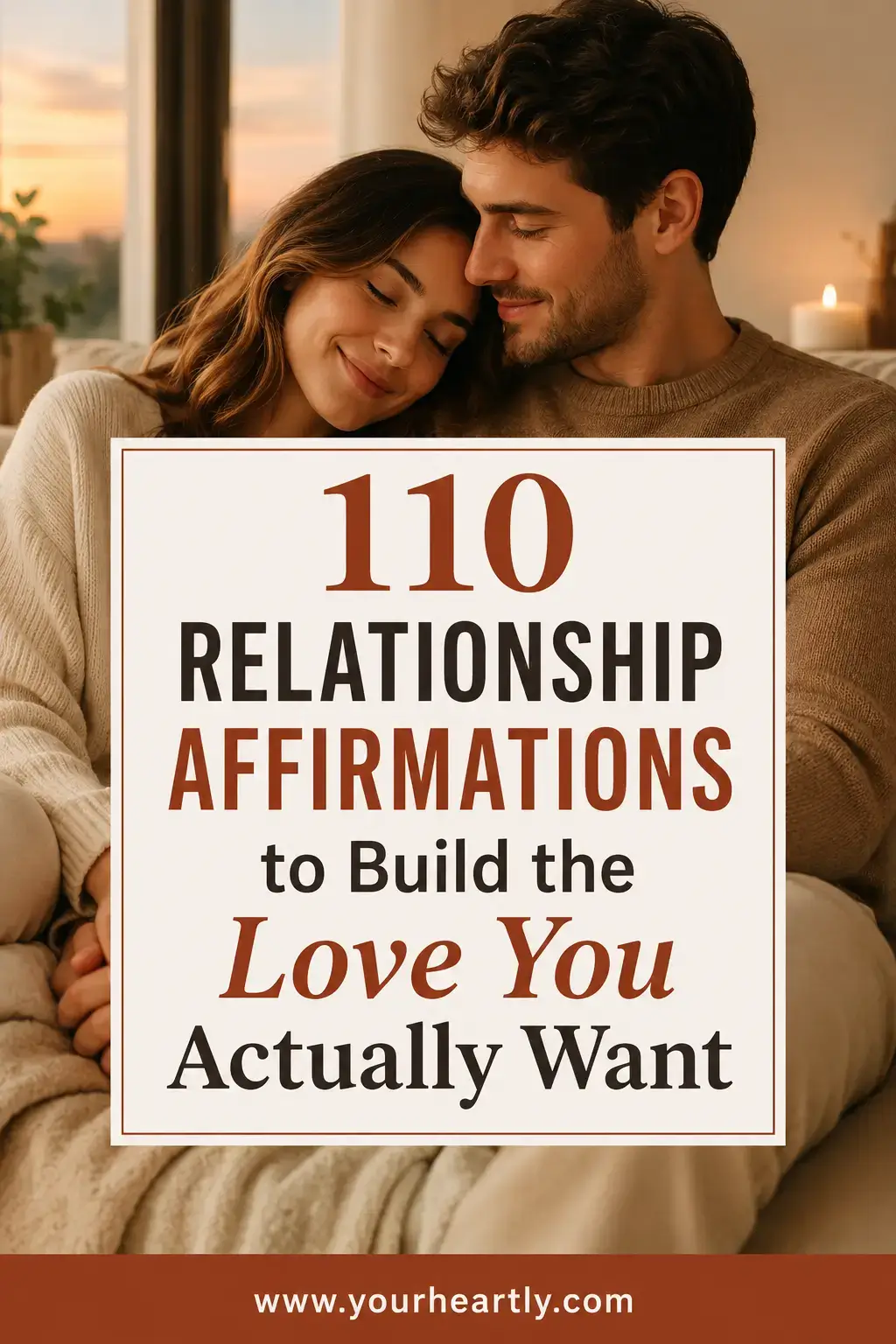


It is possible to want a healthy relationship and still carry habits that pull you toward confusion. You may overthink delayed texts, avoid difficult conversations, give too much too early, or accept less than you need because being alone feels more frightening than being disappointed.
Relationship affirmations can help you bring your attention back to the qualities that actually create secure love: honesty, reciprocity, respect, boundaries, affection, communication, consistency, and emotional safety.
Think about the difference between a connection that keeps you guessing and one where actions match words. In real life, healthy love often feels less dramatic than anxious love because you are not constantly trying to decode what the other person means.
These affirmations are written to help you build the kind of relationship you actually want rather than simply hold onto any relationship at all. Use them whether you are single, dating, healing, or already committed.
Healthy Love Begins With What You Are Willing to Accept
Your relationship standards are not only a list of things you want from someone else. They also show up in what you do when those things are missing.
If you say you value communication but stay indefinitely in situations where basic conversations never happen, the standard remains an idea rather than a boundary. Healthy love requires both clarity and follow-through.
This can feel uncomfortable because boundaries may risk losing a connection. But sometimes losing access to confusion is exactly what protects your chance to build something healthier.
Affirmations can strengthen this part of your mindset by reminding you that being chosen is not the same as being treated well.
For this topic, a useful question is whether your next choice supports the kind of relationships you want to build. That question brings the idea out of theory and into the ordinary decisions that shape your days.
You do not need to transform everything at once. A single response that is more secure, more deliberate, or more aligned with what you value can become evidence that a different pattern is already possible.
Secure Relationships Are Built Through Repeated Actions
Grand gestures can be memorable, but long-term trust is usually built through smaller patterns. People call when they say they will, repair after conflict, tell the truth, show affection, respect limits, and make room for each other’s needs.
You may have experienced how calming consistency can be. When someone is reliable, you spend less time interpreting mixed signals and more time actually enjoying the relationship.
Affirmations around security can help you stop romanticizing unpredictability. They remind you that peace is not boring and that emotional safety is not a lack of chemistry.
The goal is not a conflict-free relationship. It is a relationship where conflict does not require fear, punishment, manipulation, or the loss of your voice.
For this topic, a useful question is whether your next choice supports the kind of relationships you want to build. That question brings the idea out of theory and into the ordinary decisions that shape your days.
You do not need to transform everything at once. A single response that is more secure, more deliberate, or more aligned with what you value can become evidence that a different pattern is already possible.
How to Use Relationship Affirmations Without Ignoring Red Flags
Positive thinking should never be used to explain away behavior that repeatedly hurts you. An affirmation like “Love is safe for me” does not mean you must stay where you feel unsafe.
Instead, use the sentence as a standard. Ask whether the relationship in front of you actually supports the belief you are trying to build.
If the answer is no, the affirmation may guide you toward a conversation, a boundary, counseling, distance, or an ending. Healthy affirmations bring you closer to reality rather than further from it.
Choose statements that strengthen your ability to see clearly, communicate honestly, and value reciprocity. Those qualities protect love far better than pretending every problem is temporary.
For this topic, a useful question is whether your next choice supports the kind of relationships you want to build. That question brings the idea out of theory and into the ordinary decisions that shape your days.
You do not need to transform everything at once. A single response that is more secure, more deliberate, or more aligned with what you value can become evidence that a different pattern is already possible.
Create a Relationship Check-In With Yourself
Once a week, ask yourself how the relationship feels in your body and your daily life. Do you feel respected, heard, able to be honest, and free to have needs?
Also look at your own behavior. Are you communicating directly, listening well, keeping promises, expressing appreciation, and allowing the other person to have boundaries too?
Choose one affirmation that reflects the area you want to strengthen. Then connect it to an action, such as asking a clear question instead of hinting or thanking your partner for something you normally take for granted.
This keeps affirmations grounded in mutual behavior. Love becomes something you actively practice, not just something you hope to feel.
For this topic, a useful question is whether your next choice supports the kind of relationships you want to build. That question brings the idea out of theory and into the ordinary decisions that shape your days.
You do not need to transform everything at once. A single response that is more secure, more deliberate, or more aligned with what you value can become evidence that a different pattern is already possible.
Relationship Affirmations for Self-Worth and Standards
Use these to remember that healthy love should not require you to disappear, beg, or constantly prove your value. For these relationship affirmations, read this section slowly rather than treating it like a checklist. Choose three to five lines that match what you are dealing with right now, because a smaller set is easier to remember when the real-life moment arrives.
To make this relationship affirmations practice more practical, connect one statement to a visible choice. You might decide to communicate clearly and kindly, protect your relationships, or respond in a more secure way than you normally would.
If a relationship affirmations line feels too strong, soften it with language such as “I am learning” or “I am open to.” You are not trying to force belief; you are giving your mind a more useful direction than the automatic story that usually appears around voice.
Return to the same few relationship affirmations statements for several days and notice what changes. The most useful line is rarely the one that sounds impressive; it is the one that helps you make a more open, clearer, or more self-respecting choice when it counts.
- I deserve relationships where I can communicate clearly and kindly.
- My trust is strengthened by mutual effort.
- I am respected enough to ask for what I need.
- Even when I worry about being misunderstood, I can stay loyal to my standards.
- I choose love that makes room for me to let actions matter more than promises.
- I do not have to chase what is meant to be reciprocal.
- My standards is not measured by how hard I can convince someone to choose me.
- I can be loved and still have boundaries.
- I trust consistent actions more than confusing promises.
- I am learning to stay connected to myself while loving someone without abandoning myself.
- Healthy love allows both people to have a voice.
- I welcome relationships that protect my self-worth.
- I can communicate directly instead of testing or guessing.
- I choose to create emotional safety through honesty because honesty supports real connection.
- I am worthy of love that feels heard, not constantly uncertain.
- When when someone cannot meet my needs, I return to self-respect before I react.
- I deserve relationships where I can receive love without suspicion.
- My voice is strengthened by mutual effort.
- I am worthy enough to ask for what I need.
- Even when a conversation feels difficult, I can stay loyal to my standards.
- I choose love that makes room for me to build trust through consistent actions.
- My trust is not measured by how hard I can convince someone to choose me.
- I can be worthy and still have boundaries.
- I am learning to respect healthy boundaries without abandoning myself.
- I welcome relationships that protect my standards.
- I choose to ask for what I need without shame because honesty supports real connection.
- I am worthy of love that feels balanced, not constantly uncertain.
- When when old relationship fears return, I return to self-respect before I react.
Relationship Affirmations for Trust and Emotional Safety
These statements support calm, honesty, consistency, and the belief that secure love can feel steady. For these relationship affirmations, read this section slowly rather than treating it like a checklist. Choose three to five lines that match what you are dealing with right now, because a smaller set is easier to remember when the real-life moment arrives.
To make this relationship affirmations practice more practical, connect one statement to a visible choice. You might decide to listen without abandoning my own truth, protect your boundaries, or respond in a more clear way than you normally would.
If a relationship affirmations line feels too strong, soften it with language such as “I am learning” or “I am open to.” You are not trying to force belief; you are giving your mind a more useful direction than the automatic story that usually appears around love.
Return to the same few relationship affirmations statements for several days and notice what changes. The most useful line is rarely the one that sounds impressive; it is the one that helps you make a more honest, clearer, or more self-respecting choice when it counts.
- I deserve relationships where I can let actions matter more than promises.
- My heart is strengthened by mutual effort.
- I am loved enough to ask for what I need.
- I choose love that makes room for me to choose reciprocity over chasing.
- My voice is not measured by how hard I can convince someone to choose me.
- I can be secure and still have boundaries.
- I am learning to create emotional safety through honesty without abandoning myself.
- I welcome relationships that protect my trust.
- I choose to practice affection and appreciation because honesty supports real connection.
- I am worthy of love that feels respected, not constantly uncertain.
- I deserve relationships where I can listen without abandoning my own truth.
- My relationships is strengthened by mutual effort.
- I am honest enough to ask for what I need.
- I choose love that makes room for me to choose people who meet me with effort.
- My heart is not measured by how hard I can convince someone to choose me.
- I can be honest and still have boundaries.
- I am learning to ask for what I need without shame without abandoning myself.
- I welcome relationships that protect my voice.
- I choose to communicate clearly and kindly because honesty supports real connection.
- I am worthy of love that feels worthy, not constantly uncertain.
- I deserve relationships where I can practice affection and appreciation.
- My communication is strengthened by mutual effort.
- I am secure enough to ask for what I need.
- Even when someone cannot meet my needs, I can stay loyal to my standards.
- I choose love that makes room for me to walk away from patterns that diminish me.
- My relationships is not measured by how hard I can convince someone to choose me.
- I can be connected and still have boundaries.
- I am learning to make room for repair after conflict without abandoning myself.
Relationship Affirmations for Communication and Boundaries
Use this group when you need courage to say what you mean, hear the other person, or protect an important limit. For these relationship affirmations, read this section slowly rather than treating it like a checklist. Choose three to five lines that match what you are dealing with right now, because a smaller set is easier to remember when the real-life moment arrives.
To make this relationship affirmations practice more practical, connect one statement to a visible choice. You might decide to receive love without suspicion, protect your love, or respond in a more balanced way than you normally would.
If a relationship affirmations line feels too strong, soften it with language such as “I am learning” or “I am open to.” You are not trying to force belief; you are giving your mind a more useful direction than the automatic story that usually appears around trust.
Return to the same few relationship affirmations statements for several days and notice what changes. The most useful line is rarely the one that sounds impressive; it is the one that helps you make a more worthy, clearer, or more self-respecting choice when it counts.
- I welcome relationships that protect my heart.
- I choose to receive love without suspicion because honesty supports real connection.
- I am worthy of love that feels loved, not constantly uncertain.
- When when love asks me to be honest, I return to self-respect before I react.
- I deserve relationships where I can choose people who meet me with effort.
- My self-worth is strengthened by mutual effort.
- I am open enough to ask for what I need.
- Even when old relationship fears return, I can stay loyal to my standards.
- I choose love that makes room for me to stay connected to myself while loving someone.
- My communication is not measured by how hard I can convince someone to choose me.
- I can be clear and still have boundaries.
- I am learning to choose peace over confusing chemistry without abandoning myself.
- I welcome relationships that protect my relationships.
- I choose to let actions matter more than promises because honesty supports real connection.
- I am worthy of love that feels honest, not constantly uncertain.
- When when I am tempted to overgive, I return to self-respect before I react.
- I deserve relationships where I can walk away from patterns that diminish me.
- My standards is strengthened by mutual effort.
- I am reciprocal enough to ask for what I need.
- I choose love that makes room for me to respect healthy boundaries.
- My self-worth is not measured by how hard I can convince someone to choose me.
- I can be reciprocal and still have boundaries.
- I am learning to receive love without suspicion without abandoning myself.
- I welcome relationships that protect my communication.
- I choose to listen without abandoning my own truth because honesty supports real connection.
- I am worthy of love that feels secure, not constantly uncertain.
- I deserve relationships where I can stay connected to myself while loving someone.
Relationship Affirmations for Mutual Love and Lasting Connection
These lines focus on reciprocity, affection, repair, partnership, and building a relationship that can grow. For these relationship affirmations, read this section slowly rather than treating it like a checklist. Choose three to five lines that match what you are dealing with right now, because a smaller set is easier to remember when the real-life moment arrives.
To make this relationship affirmations practice more practical, connect one statement to a visible choice. You might decide to practice affection and appreciation, protect your standards, or respond in a more secure way than you normally would.
If a relationship affirmations line feels too strong, soften it with language such as “I am learning” or “I am open to.” You are not trying to force belief; you are giving your mind a more useful direction than the automatic story that usually appears around standards.
Return to the same few relationship affirmations statements for several days and notice what changes. The most useful line is rarely the one that sounds impressive; it is the one that helps you make a more balanced, clearer, or more self-respecting choice when it counts.
- I am clear enough to ask for what I need.
- I choose love that makes room for me to create emotional safety through honesty.
- I can be heard and still have boundaries.
- I am learning to let actions matter more than promises without abandoning myself.
- I choose to choose reciprocity over chasing because honesty supports real connection.
- I am worthy of love that feels open, not constantly uncertain.
- I deserve relationships where I can build trust through consistent actions.
- I am safe enough to ask for what I need.
- Even when love asks me to be honest, I can stay loyal to my standards.
- I choose love that makes room for me to ask for what I need without shame.
- I can be safe and still have boundaries.
- I am learning to listen without abandoning my own truth without abandoning myself.
- I choose to choose people who meet me with effort because honesty supports real connection.
- I am worthy of love that feels reciprocal, not constantly uncertain.
- When when a conversation feels difficult, I return to self-respect before I react.
- I deserve relationships where I can choose reciprocity over chasing.
- I am heard enough to ask for what I need.
- Even when I am tempted to overgive, I can stay loyal to my standards.
- I choose love that makes room for me to make room for repair after conflict.
- I can be respected and still have boundaries.
- I am learning to practice affection and appreciation without abandoning myself.
- I choose to walk away from patterns that diminish me because honesty supports real connection.
- I am worthy of love that feels clear, not constantly uncertain.
- When when I worry about being misunderstood, I return to self-respect before I react.
- I deserve relationships where I can ask for what I need without shame.
- I am balanced enough to ask for what I need.
- I choose love that makes room for me to choose peace over confusing chemistry.
Conclusion
Relationship affirmations can help you focus on the qualities that make love sustainable: respect, consistency, honesty, reciprocity, boundaries, affection, and emotional safety. They are not meant to keep you attached to a relationship that repeatedly ignores those things.
Choose the statements that reflect the love you want to practice and receive. Then let your choices, conversations, and boundaries support the same message.
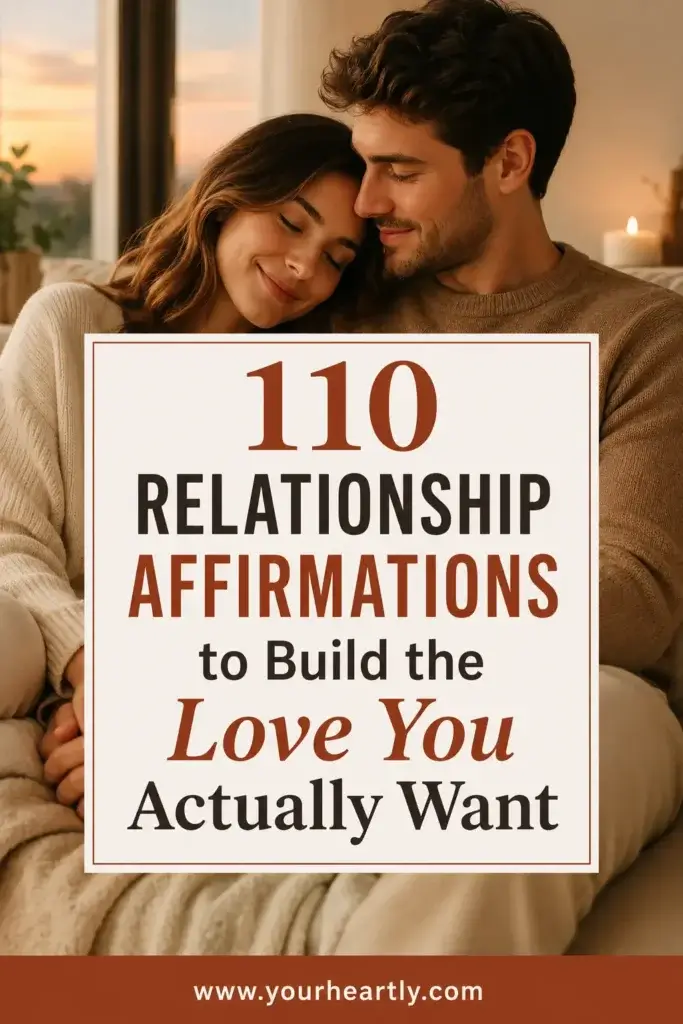
You do not need to use all 110 statements at once. Start with the lines that help you feel more secure, then notice whether they make it easier to communicate clearly and kindly in everyday life.
Keep the practice personal and flexible. As your needs change, replace old phrases with words that better support your relationships, your choices, and the direction you want your life to take.